
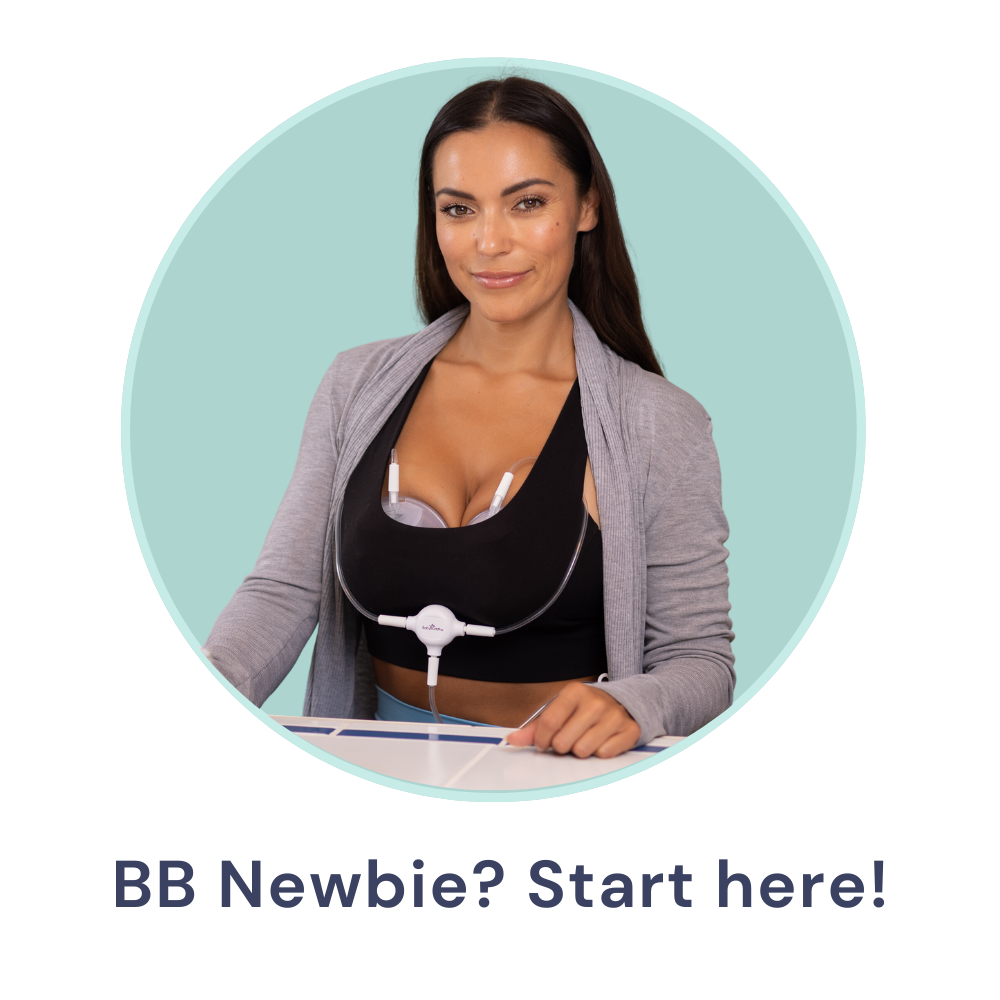

Pumping at work, on the road, and between errands is the default for most modern moms, not the exception. A pump that only works tethered to a wall outlet was never built for that life. The right on-the-go breast pump fits in a tote, runs on a charged battery, stays quiet in shared spaces, and provides adjustable suction without making you stop your day. The current BabyBuddha 3.0 Primary Portable Breast Pump is built for regular daily pumping with a compact external motor that can be worn with the included lanyard.
This guide breaks down the features that actually matter, what to put in your pumping bag, and how to make pumping at work, in the car, or on a plane feel less like a logistics puzzle.
Also Read
- Mobile Breast Pumps: How to Choose for Work, Travel, and Routines
- Primary vs Wearable Breast Pumps: How to Choose the Right Pump for You
- Best Portable Breast Pump for Strong Suction: Why Many Moms Choose BabyBuddha as Their Primary Pump
Quick Summary
An on-the-go breast pump needs a compact design, rechargeable battery, adjustable suction and a closed system. BabyBuddha 3.0 provides suction from 53 to 315 mmHg, four pumping modes and 30 settings. Its USB-C charging, external motor and included lanyard support regular pumping away from a wall outlet.
Key Points
- Weight matters more than you expect. Anything over a pound stops being portable once you have it in a tote with bottles, ice packs, and a laptop.
- Battery life matters. Choose a rechargeable pump that can cover your planned sessions without chasing outlets between meetings.
- Suction range matters more than the maximum. Adjustable settings help you find a comfortable level for stimulation and expression.
- Quiet operation helps in shared spaces. Check the current product information instead of relying on old model measurements.
- Closed system protects milk and pump. Prevents milk from entering tubing, which means less cleaning, no mold risk, and longer pump life.
- Form factor changes the experience. A primary portable pump uses an external motor, while a fully in-bra wearable is a separate option.
- USB-C charging is the modern standard. Same cable as your phone, charges from a car USB or a portable battery bank.
- TSA allows breast milk and pumps. Breast milk in any quantity is allowed through security; pumps count as medical equipment and do not count against carry-on limits.
Find a primary pump that can travel with you. BabyBuddha 3.0 offers suction from 53 to 315 mmHg, four modes and 30 settings in a compact rechargeable design. See BabyBuddha 3.0 features and included EasyFit sizes.

What Counts as an "On-the-Go" Breast Pump?
The category includes three different form factors, and they are not interchangeable.
Portable pumps are small motor units that connect to flanges or collection cups via short tubing. Usually pocket-sized or clip-to-clothing. Best for moms who want hospital-grade output without sacrificing portability.
Wearable pumps are self-contained pump-plus-cup units that sit entirely inside a bra. Best for total discretion in moments like Zoom meetings, driving, or waiting in line. Typically lower output than portable models, with shorter battery life.
Manual pumps are hand-powered, virtually silent, and need no battery. Best for occasional use, backup in your bag, or relief pumping when you cannot get to your main pump.
Many moms use a primary portable pump with flanges for regular sessions and keep a manual pump as a backup. A separate fully in-bra wearable can help when discretion matters most.
Features Checklist for Your On-the-Go Pump
Here is the short list of features that actually matter in a portable pump:
- A compact motor that fits in your pumping bag and is comfortable to carry.
- An adjustable suction range that supports regular primary-pump use.
- Multiple stimulation and expression options with enough settings for comfort.
- A rechargeable battery that can cover your planned sessions away from an outlet.
- USB-C rechargeable. Charges from a car USB, a portable battery, or any modern wall adapter.
- Quiet operation for pumping in shared spaces.
- Closed-system design. Required for hygiene and pump longevity.
- A fully in-bra wearable option if you need hands-free pumping and more discretion.
- Insurance-eligible under the ACA. Most plans cover one pump per pregnancy at no cost.
Your Pumping Bag Checklist
What goes in the bag is almost as important as which pump you bring. A complete on-the-go kit includes:
- Pump and charger (USB-C cable plus a wall block; a portable battery bank is a smart add).
- Flanges or collection cups in the size you have already fitted; bring inserts if you size between standard flanges.
- Bottles or collection bags with extra caps and lids.
- Spare duckbill valves and tubing in a small zip bag.
- Cleaning supplies: wipes for the outside of the pump, a small bottle of mild dish soap, and a microfiber towel.
- Insulated cooler bag and ice packs. A good cooler keeps milk cold for up to 48 hours.
- Hand sanitizer and a small clean pad to set parts on if no clean surface is available.
- Your insurance pump prescription, which is helpful when traveling, especially through TSA.

Pumping at Work, in the Car, and on the Road
The legal and logistical landscape for pumping outside the home has improved meaningfully over the last few years.
At work, the PUMP Act guarantees breaks and a private, non-bathroom space for pumping for one year after birth. A fully in-bra wearable can help when you need more discretion during a session.
In the car, pump while parked, never while driving. A USB-C pump charges from the car's USB port; a wearable pump tucks inside a sports bra so you can pump without exposing yourself in a parking lot.
On a plane, the TSA allows breast milk in any quantity, plus ice packs and the pump. Many airports now have Mamava lactation pods, and the Mamava app shows locations. Pumps count as medical equipment and do not count against your carry-on limits.
For hotel travel, request a fridge in advance for milk storage. For long trips, services like Milk Stork ship prepaid refrigerated boxes back home overnight.
The "5 minutes before, 5 minutes after" rule. Build in 5 minutes on each side of a pumping session for setup, breakdown, and cleanup. A 20-minute session is really a 30-minute calendar block, and the moms who plan for the full 30 are the ones who do not feel rushed.
Pack a rechargeable primary pump for regular sessions away from home. BabyBuddha 3.0 charges through USB-C and includes a lanyard for carrying its compact motor. Check your BabyBuddha insurance options.
How BabyBuddha Fits the On-the-Go Mom
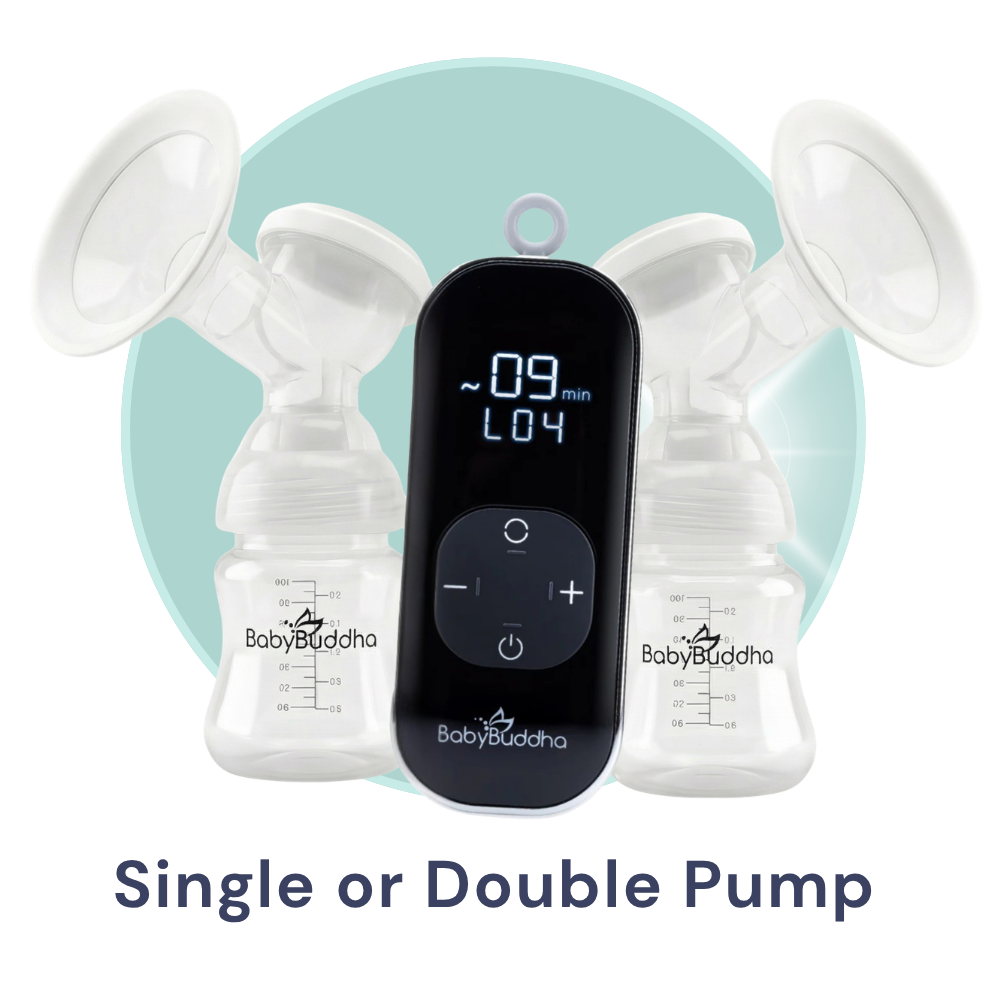
BabyBuddha 3.0 is the current primary portable option. It offers suction from 53 to 315 mmHg, four pumping modes and 30 settings. The compact external motor is rechargeable through USB-C and can be worn with the included lanyard.
The included EasyFit system comes with two 24mm flanges and ten inserts, two each in 13mm, 15mm, 17mm, 19mm and 21mm sizes. The box also includes bottles, storage lids, tubing and a carrying tote.
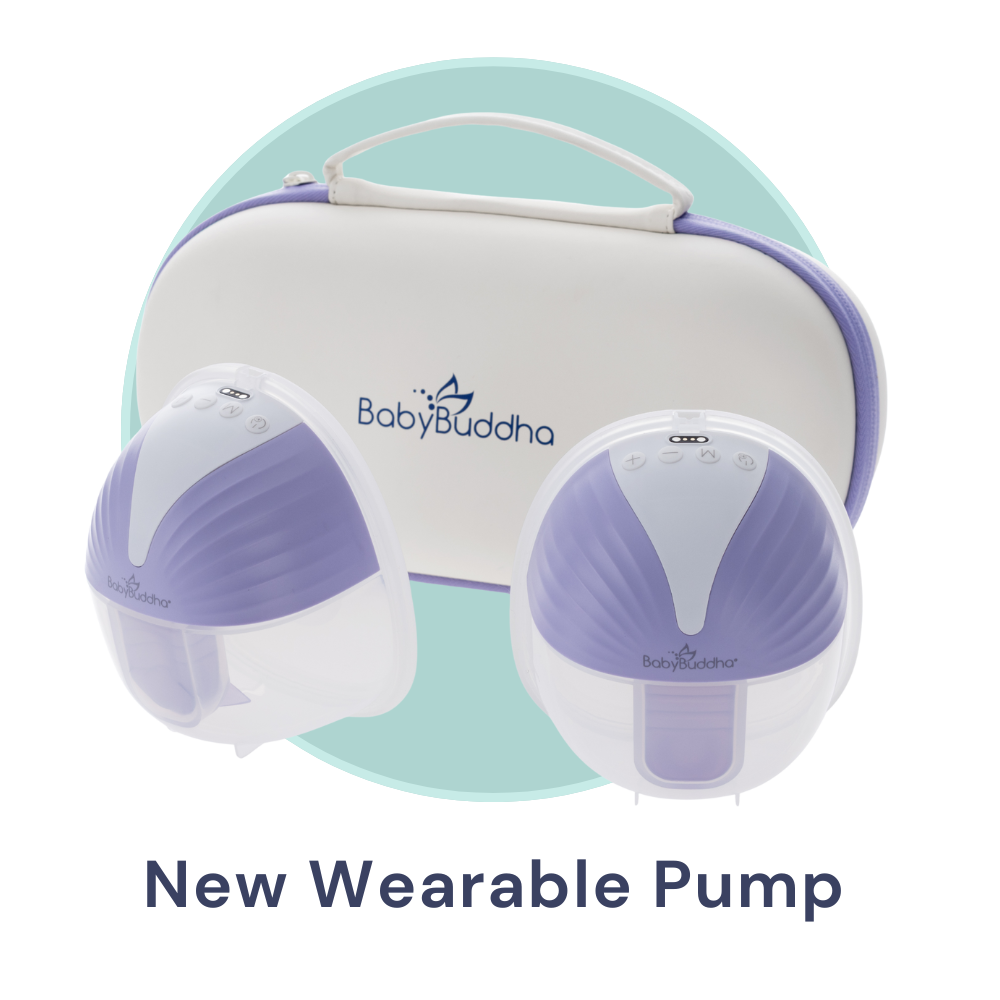
BabyBuddha Wearable is for moms who want the wearable form factor with 30 settings and in-cup LED lights for nighttime sessions. 8 oz cups, magnetic charging, 2+ hours per charge.
BabyBuddha 3.0 is available through insurance suppliers and directly through the BabyBuddha insurance page. The American Academy of Pediatrics provides guidance for expressing milk while separated from your baby.
7 On-the-Go Pumping Truths Every Mom Should Know
A quick checklist to keep in your phone notes:
- Light pump beats heavy pump. Under 1 lb is the threshold.
- Battery life is the real spec. Aim for 3+ sessions per charge.
- Quiet pumps work better in shared spaces.
- A fully in-bra wearable can help when discretion matters most.
- Closed system equals less cleaning. Tubing stays milk-free.
- TSA allows breast milk and pumps. Bring the prescription anyway.
- Always pack a backup manual. It saves the day twice a year.
Choosing an On-the-Go Breast Pump
The right on-the-go breast pump fits the day you live. A compact motor, rechargeable battery, adjustable settings and quiet operation matter more than a single maximum-suction number. BabyBuddha 3.0 is the current primary portable option for regular pumping at home, work or while traveling.
The BabyBuddha team includes IBCLCs and pumping parents. Free Certified Lactation Specialist consultations come with every pump, so you have support when your work or travel routine changes.
Find the BabyBuddha pump that fits your routine. Browse the full BabyBuddha pump lineup, or check your insurance coverage to get a pump at no out-of-pocket cost.