



You're here for one of two reasons. Either you're eyeing the overnight stretch and wondering whether you can finally sleep through it, or a session slipped and you want to know what it cost you. Both come down to the same thing: the gaps, not the schedule.
This guide stays on the gaps. What changes while you sleep, what a missed or delayed daytime session does, how to recover without overcorrecting, and why the same gap carries different weight in week two than it does in month six.
Also Read
- 9 Reasons for Sudden Decrease in Milk Supply, Plus Solutions
- A Complete Guide on How To Increase Breast Milk Supply
- Ten Tips for Moms That Are Exclusively Pumping
What You Need to Know
Clinical guidance doesn't set a maximum number of hours between pumping sessions, and anyone quoting a hard figure goes beyond what the evidence supports. The clinical sources do say something clearer and more useful: milk removal drives production, night sessions matter for keeping production up, and long stretches without removing milk can reduce supply. A single missed session is recoverable. A pattern of them moves the needle, and the early weeks are less forgiving than an established routine.
Key Points
- The guidance gives no safe hour count. Clinical guidance covers frequency and thoroughness, not a maximum gap, so treat specific numbers online with suspicion.
- Night removal protects production. Overnight sessions carry more weight for maintaining supply than their place on the clock suggests.
- One miss is recoverable. Get back on at the next session and move on.
- Patterns are the risk that matters. Repeated gaps, not a single slip, reduce supply over time.
- Early supply needs more care. The first weeks set up what follows, so protect sessions hardest then.
- Engorgement is the signal to act on. Going too long between removals can leave you painfully full, and that fullness itself can lower output.
Why There's No Single "Safe" Number
Milk production runs on removal. The Academy of Breastfeeding Medicine is direct about it. Drain the breasts more often and more completely, and the rate of milk secretion rises. Drain them irregularly or incompletely, and production falls. A second protocol describes the same loop: milk volume runs on a feedback system in which removing more milk raises production.
A single number fails because it would have to cover situations that behave differently. A mom two weeks postpartum building supply, a mom six months in with a settled routine, and a mom pumping for a baby in the hospital are all asking the same question with different answers. Add in how much you make, how completely each session empties you, and how many sessions the rest of your day holds, and an hour count stops meaning much.
The principle transfers across all of those. Frequent, thorough removal keeps production up. Infrequent or incomplete removal brings it down. Your own routine matters, not a number from a forum.
This is also why the advice varies so much between people who all sound confident. Someone who makes a generous supply and empties completely in twelve minutes can stretch further than someone whose sessions run long and finish incomplete, and both of them will tell you what worked. Neither is wrong about themselves, and neither is describing you.

The Overnight Stretch: What Changes While You Sleep
Night sessions are worth more than their timing suggests. The Academy of Breastfeeding Medicine notes that night feedings are particularly important for maintaining copious milk production, and that frequent breastfeeding sessions, including through the night, support adequate production. That is the opposite of the assumption behind dropping the overnight session first because it's the least convenient one.
The useful way to hold it is a floor on frequency rather than a ceiling on the gap: keep a night removal in the rotation, rather than chase a maximum number of hours. Count your removals across the day rather than policing the clock between them, and the overnight stretch tends to sort itself out.
Where a long overnight stretch bites is fullness. The AAP notes that painful excessive engorgement can follow missed feedings or a change in how often your baby nurses, and that excessive engorgement can itself decrease your milk supply. So the overnight limit is one your own body sets. If you wake up soaked, rock hard, and uncomfortable, the stretch ran too long for you, whatever it ran for somebody else.
Extending a stretch works better gradually than in one jump. Push the session later by half an hour at a time over several nights, watch how you feel in the morning and what your daytime totals do over the following week, and hold there if either one slips. Dropping a session outright and hoping is how people end up engorged at 4 a.m. and short on milk a week later.
Practical signs tell you where your own limit sits. Waking before your alarm because you're uncomfortable, leaking through a bra pad, a morning session that overflows the bottle, or tender spots that take a full session to soften all point to a stretch that ran long. A morning where you wake up full but comfortable, and your daytime totals hold through the week, says you found a stretch that works.
Missed and Delayed Sessions: What Happens Next
A single skipped session is a bad afternoon, not a turning point. Production responds to the pattern of removal across days and weeks, so one gap in an otherwise steady routine is something your supply absorbs. Get back on at the next session, skip the catch-up math, and carry on.
A delayed session is gentler still. Pushing a session an hour later shortens the next interval rather than removing a session, and your total removals for the day stay the same. The thing to avoid is letting a delay quietly turn into a skip, because the AAP says diminished supply most often results from skipped sessions or sessions cut short.
Repeated gaps are a different matter. Three or four weeks of trimmed and skipped sessions reduce total daily removal, and production slips downward. The useful signal is your weekly total rather than any single session, since daily output swings for reasons unrelated to your schedule.
One more distinction worth holding onto: a gap you chose and a gap that happened to you carry the same weight physiologically, but they call for different responses. A planned longer night is something you can build toward and monitor. An unplanned miss is something you absorb and move past. Treating the second like a failure is how people end up pumping at midnight to recover two ounces they didn't need.

How to Recover After a Gap
After a missed session, the instinct is to overcorrect, but overcorrecting creates its own problems. The fix is almost always smaller than it feels, and it works on a longer timeline than a single day.
- Return to your normal rhythm first. Your supply has adjusted to your existing schedule, so getting back on it does most of the work.
- Add one short session if you want to. A brief extra removal later in the day makes up some of the missed volume without disrupting the pattern.
- Consider a power-pumping block for a sustained dip. A power-pumping session mimics cluster feeding over an hour and suits a genuine drop rather than a single missed session.
- Don't chase the deficit. Pumping aggressively for one day to recover a few ounces costs you sleep and usually doesn't work. Consistency over the following week does more.
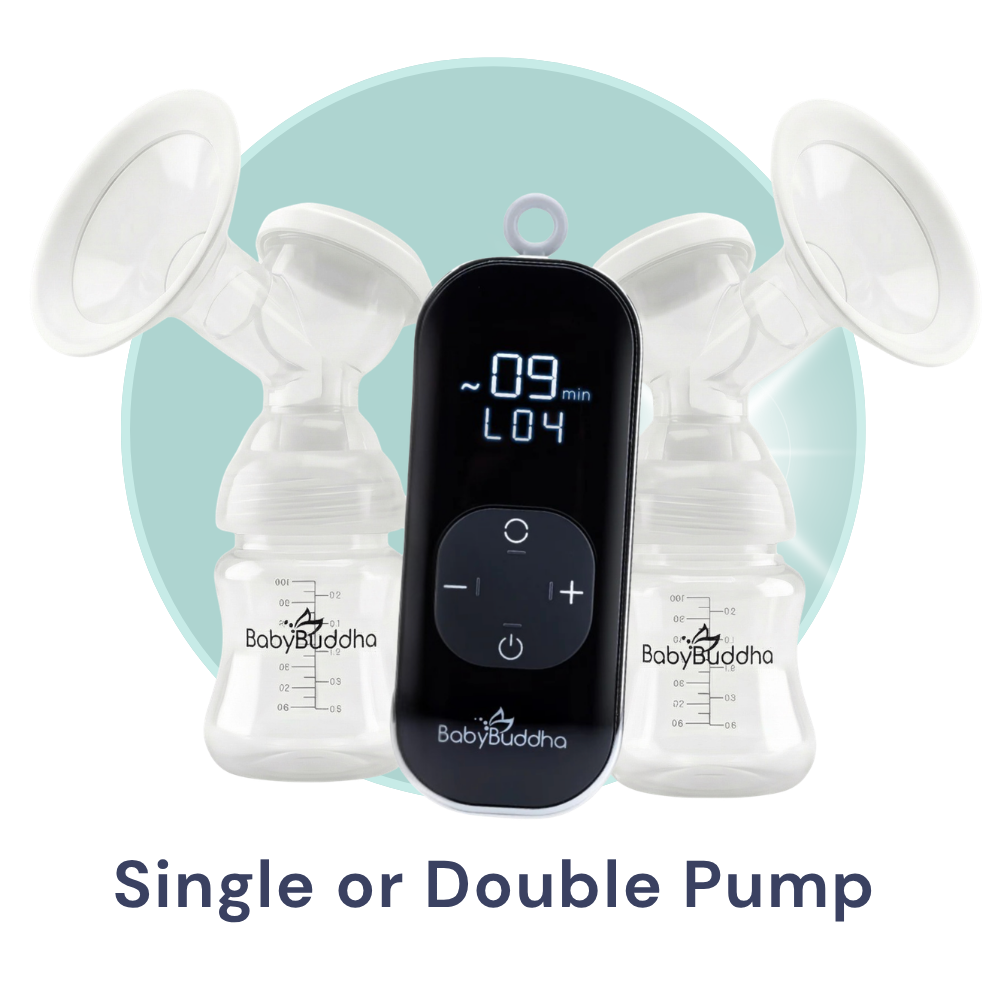
A pump you reach for easily shortens the next gap, which is the quiet advantage of portability. The BabyBuddha 3.0 Primary Portable Breast Pump runs hospital-strength suction up to 320 mmHg from a pocket-sized motor, with four modes plus Double Drop Expression Mode, so a session fits into a car, a hallway, or ten minutes you didn't plan for. The sessions you keep are the ones that matter, and a pump that travels sees more use than one that needs a desk and an outlet.
Early Days vs. Established Supply
The same gap doesn't carry the same risk at every stage, and the first weeks are where care pays off most.
Research in Breastfeeding Medicine found that coming to volume by postpartum day 14, which the study defined as pumping at least 500 mL a day, was the strongest predictor of still providing mother's own milk at NICU discharge for very low birthweight infants, and the authors concluded that lactation support should target that early period. That study looked at a NICU population rather than at typical full-term pumping, so read it as a reason to protect early sessions rather than as a number that applies to you.
Established supply is more forgiving. Months into a settled routine, output holds steadier against a missed session or a longer night than it does in week two. Forgiving isn't the same as immune, though, and a run of trimmed sessions will show up eventually. The guide on sudden drops in supply covers the other causes worth ruling out when output falls, and your schedule hasn't changed.
Travel and illness deserve a plan rather than improvisation. A flight, a stomach bug, or a day in a hospital waiting room is where routines break, and deciding in advance which sessions you protect makes the difference between one gap and a week of them. Pack the pump in a bag you carry rather than one you check, and keep a hand-expression fallback in mind for the session where no outlet or privacy appears.
When to Check With an IBCLC
Some questions belong with a person rather than an article, and a pump is the wrong answer to a clinical problem.
- A drop that doesn't recover. If output stays low for a week or more after you return to your normal routine, have a professional take a look.
- Pain at any point. Pumping shouldn't hurt. Pain during sessions, cracked skin, or a tender lump needs assessment, not a harder setting.
- Recurring plugged ducts or signs of infection. Fever, a red and painful area, or feeling unwell calls your provider the same day.
One piece of older advice worth retiring: pumping harder and more often to clear a plug. The Academy of Breastfeeding Medicine revised its guidance, describing plugging as microscopic ductal inflammation and narrowing rather than a single obstructed duct, and noting that the older milk-stasis advice lacks physiological validity. It also warns that pumping to empty perpetuates a cycle of hyperlactation. The AAP associates clogged ducts with an abrupt change in the feeding schedule or inadequate draining, among other causes. Steady, complete sessions prevent them better than cranking the suction.
An IBCLC or your pediatrician is also the right call for anything involving your baby's weight gain or feeding behavior. Those questions sit outside what any pump or article can answer.
Conclusion
The honest answer to how long you can go without pumping is that the clinical guidance doesn't give one, and anyone quoting you a figure is guessing. The guidance supports something steadier and more practical. Remove milk often and thoroughly, keep a night session in the rotation, treat a single miss as a single miss, and watch the weekly pattern rather than the individual session. Protect sessions hardest in the early weeks, and let your own fullness tell you when a stretch ran too long.
The pattern worth protecting is the one you can keep for months, not the one that looks best on paper for a week. A schedule you resent is a schedule you'll abandon, and the sessions you hold onto hold your supply up.
Recovery is almost always simpler than the worry suggests. Return to your rhythm, add a short session if you want to, and give it a week before you judge the result.
Make the next session easy to get to. The BabyBuddha 3.0 Primary Portable Breast Pump delivers hospital-strength suction up to 320 mmHg wherever you are.