


It's the question almost every woman asks before buying a wearable: can this be the only pump I need? The pitch is hard to resist. No cords, nothing to hold, the whole thing tucked into your bra while you work or walk the dog. The worry underneath it is just as common. If you go wearable-only, will your supply drop?
Here's the answer up front. A wearable is designed as a second pump, not a replacement for a primary one, and that's how we recommend using it. Supply depends on how often and how completely you remove milk, and a wearable asks more of your schedule on both counts. A primary pump is best for the sessions that carry the most weight, while the wearable earns its place for the ones that would otherwise get skipped.
Also Read
- Manual vs. Electric Breast Pump: Which Is Right for You?
- Breast Pump Suction Power: A Guide to Suction Levels
- A Complete Guide on How To Increase Breast Milk Supply
The Bottom Line
A wearable breast pump works best as a secondary pump rather than your only one. Supply depends on how often and how thoroughly you remove milk, and a wearable generally drains more slowly than a primary pump. That makes it easier to perform a short or incomplete session. BabyBuddha builds the Wearable for a secondary role: work, errands, travel, and night sessions. The BabyBuddha 3.0 Primary Portable Breast Pump handles regular sessions, where hospital-strength suction up to 320 mmHg empties you faster and more completely. Run the two together, and you get the mobility without putting your supply on the line.
Key Points
- Removal drives supply. More frequent, more thorough drainage raises milk production, and anything that cuts a session short works against it.
- A wearable is a second pump by design. BabyBuddha builds the Wearable for work, errands, travel, and night sessions, not as a replacement for your primary pump.
- Speed is the primary pump's advantage. A stronger motor finishes a full drain faster, which counts most on a fixed break and in the weeks you're building supply.
- Wearable-only carries some risk. A slower drain plus an out-of-sight session makes incomplete removal easy to miss until your output drops.
- Fit decides output in a wearable. The flange or insert inside the cup does the work, and the wrong size costs you milk every session.
Does a Wearable Breast Pump Lower Your Milk Supply?
No device lowers supply by sitting in your bra. The Academy of Breastfeeding Medicine puts it plainly: more frequent and thorough drainage of the breasts typically increases the rate of milk secretion, and low supply is often related to suboptimal milk removal. A second Academy protocol makes the same point: milk volume runs on a feedback loop in which removing more milk raises production.
That feedback loop cuts both ways, which is the reassuring part. A week of shorter sessions can soften your output, and a week of consistent, complete ones brings it back up. Supply responds to what you do now rather than locking in based on what happened last month, so a rough stretch is a setback rather than a verdict.
So the question isn't whether a wearable lowers supply on its own. It's whether a wearable-only routine removes milk often enough and completely enough, week after week. Those are two different tests, and a wearable can pass the first while quietly failing the second.
Here is where the risk lives. A wearable sits out of sight, which makes it easy to end a session early because you arrived somewhere or ran out of patience. Most wearables also work more slowly than a primary pump, so the same twenty minutes yields less. Put those together, and the pattern is shorter, less complete sessions, which is exactly what reduces supply. The AAP points to the same cause, noting that diminished milk supply most often results from skipped pumping sessions or not pumping long enough.
None of that makes a wearable a poor pump. It makes it a secondary pump. Keep a primary pump for the sessions that have to count, let the wearable cover the ones that would otherwise disappear, and keep the schedule from working against you.
Checking whether you empty well takes one session. Note how long the flow keeps going, whether your breasts feel soft afterward rather than full in patches, and how the total compares to your usual. A wearable that leaves you full in the same spot every time points to either the wrong fit or a session ending too soon, and both have fixes.

What a Wearable Does Well
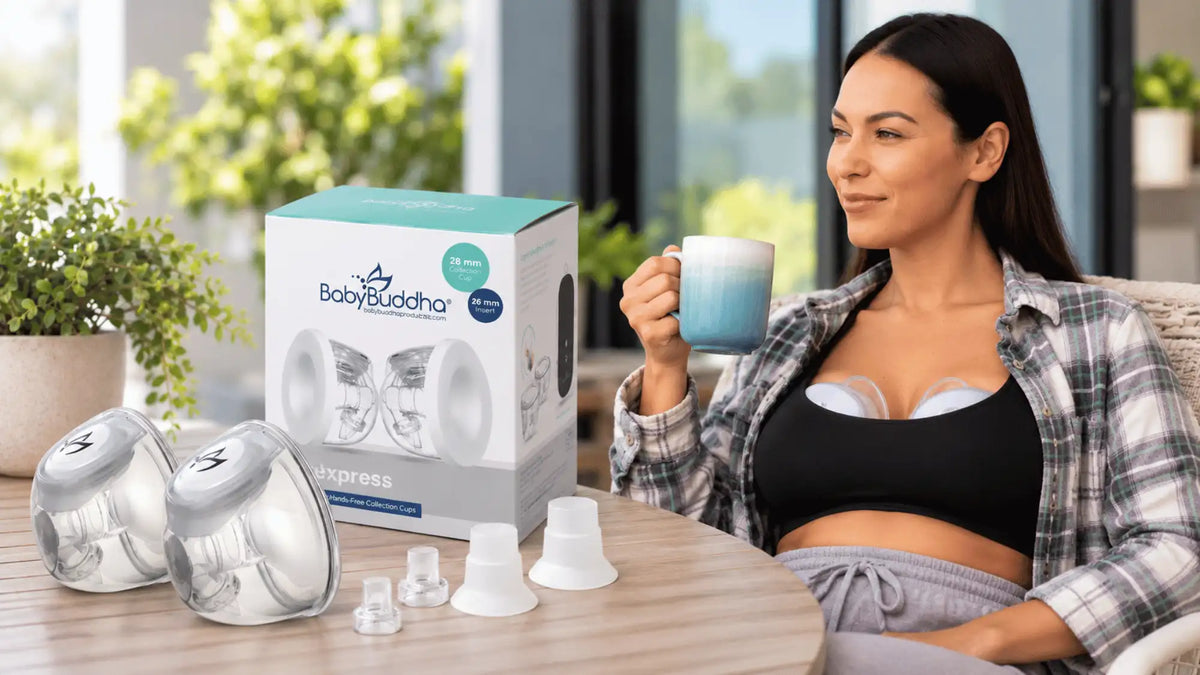
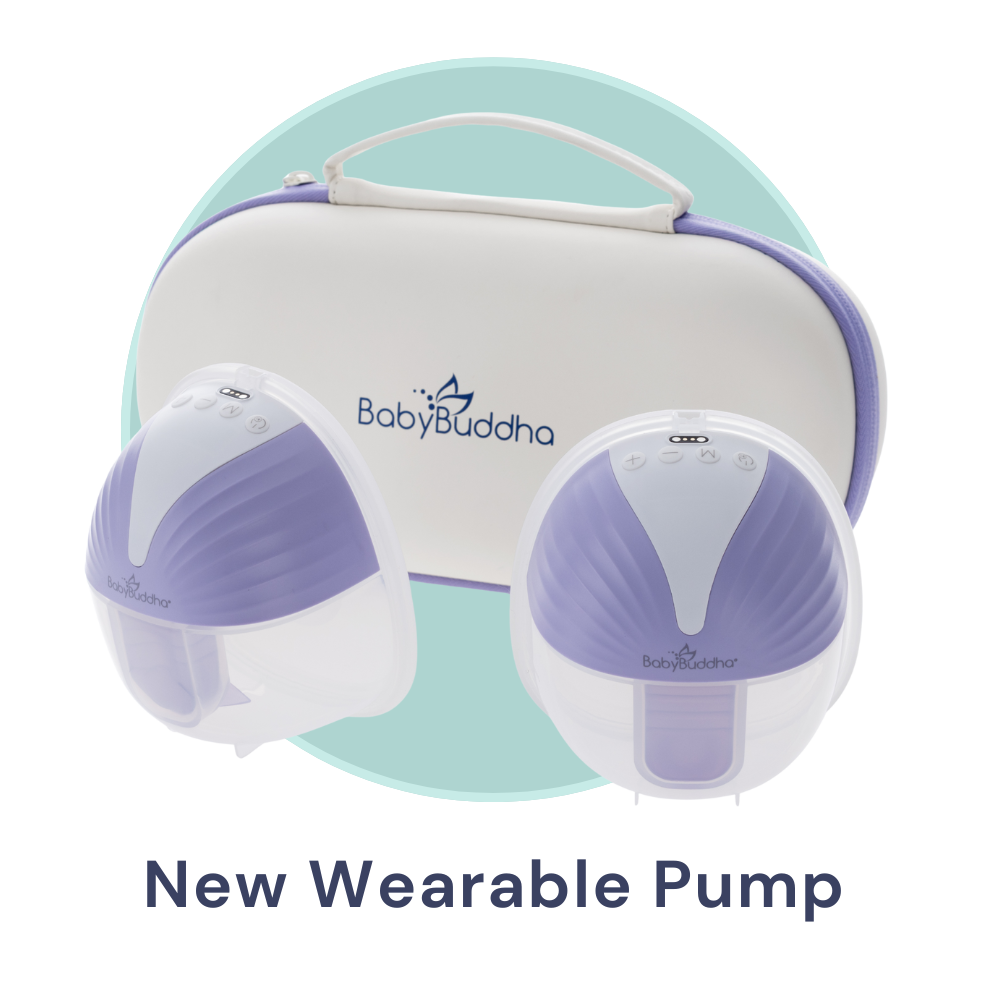
The case for a wearable is mobility, and it's a strong case. The BabyBuddha Wearable Breast Pump sits in your bra with no external unit and no cords, so you can do a session while you answer email, drive, fold laundry, or read to another child. For anyone whose day refuses to hold still, that changes how many sessions fit into it.
Discretion is the other half. A wearable under a loose top reads as nothing at all, which makes pumping possible in places a tethered setup rules out: a passenger seat, a conference room, a relative's kitchen. Mothers who travel for work or spend their days moving between sites get the most out of this.
Noise counts for more than the spec sheets suggest. A pump quiet enough to run through a phone call is a pump you'll use at times you would otherwise skip, and the sessions you keep are the ones holding your supply up.
A wearable fits best in a settled routine. Once your supply has leveled off and you know roughly what each session yields, a wearable slots into the day without much thought. The moms who find it hardest are the ones still building supply, still learning their output, or working against a tight clock, and those sessions belong to a primary pump.
Why Your Primary Pump Stays in the Rotation
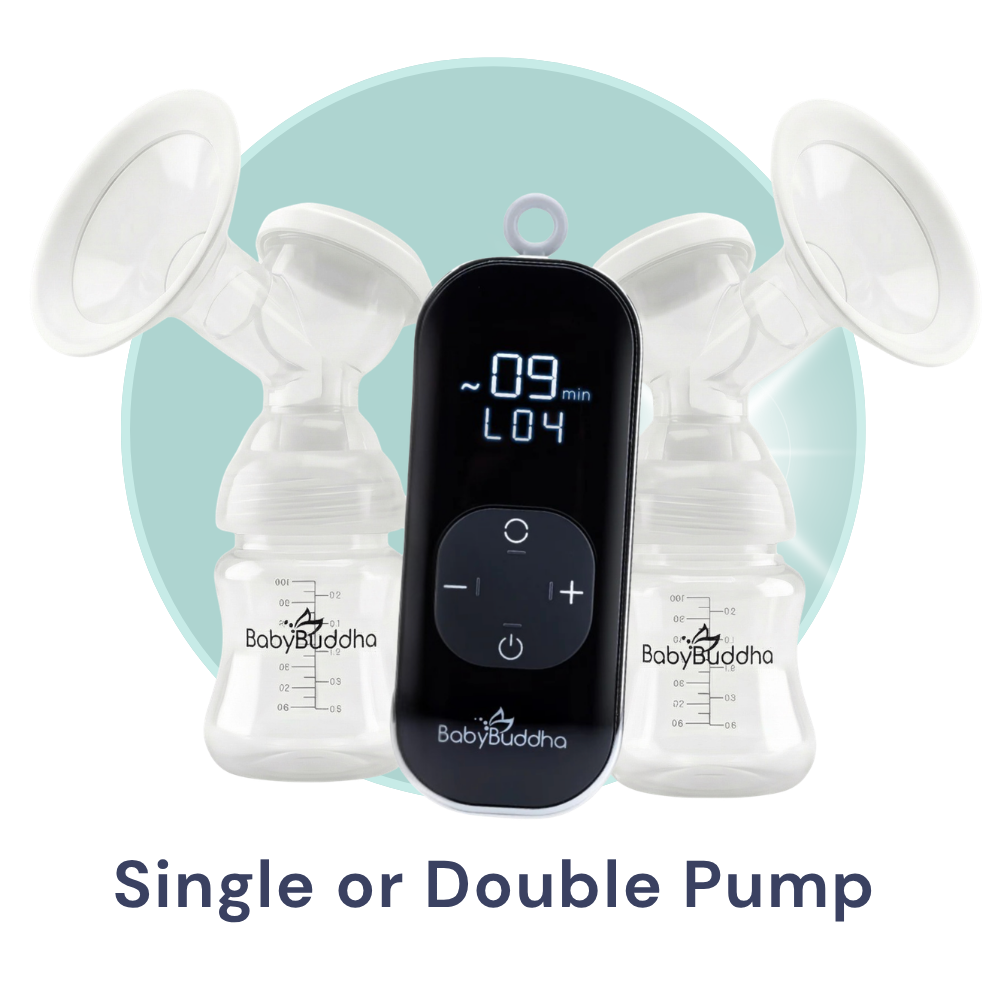
A primary pump buys you speed and full-drain power. The BabyBuddha 3.0 Primary Portable Breast Pump pulls hospital-strength suction up to 320 mmHg from a motor that clips to a waistband, with four modes plus Double Drop Expression Mode, a rhythm that gives you another way to work through a session. The suction power guide covers what the numbers mean in practice.
Three situations make that speed count. Establishing supply in the first weeks rewards the most thorough removal you can manage. A fixed break at work gives you a set number of minutes, and a faster full drain decides whether you finish or stop early. And exclusive pumping, where every ounce your baby takes comes from a session, leaves no room for a setup that empties slowly.
Portability deserves separating from power here. A pump that needs a wall outlet makes you plan around sockets. One that runs on its own battery and clips to your clothes gives you most of a wearable's freedom while keeping the stronger motor, which is why plenty of mothers reach for the primary pump more often than they expected to.
This is why BabyBuddha positions the Wearable as a secondary pump rather than a standalone one. It isn't a knock on the device. It matches each pump to the sessions it handles best.
How to Split Your Sessions Between Two Pumps
Start by naming the sessions carrying the most weight. For most moms, that means the first session of the morning, any session that has to finish inside a set break, and the ones doing the work of establishing supply. Those belong to the BabyBuddha 3.0, where a faster, more complete drain protects the output you're counting on.
The wearable takes the rest:
- The commute. A session that would otherwise be dead time, handled with nothing to hold.
- Gaps between meetings. Short, unpredictable windows where setup time decides whether you pump at all.
- Errands and travel. Airports, car seats, and anywhere a tethered setup rules out a session.
- Night sessions. Pumping half asleep is easier with no cords and nothing to knock over.
The split shifts as your routine does. A mom on maternity leave and the same mom four months into a commute need different things from the same two pumps, so revisit which sessions sit in which column every few weeks.
Cost belongs in this decision too. Two pumps mean two sets of parts to replace on their own schedules. If you're deciding where to start, start with the primary pump and add the wearable once your week starts demanding sessions away from a chair.
How to Protect Your Supply When You Pump With a Wearable
Three habits cover most of the risk.
- Hold your session count steady. Frequency moves supply, so protect your daily session count first. Dropping one because the day got busy tends to show up a week later.
- Finish the session. Give each one enough time to empty you, and allow more time than a primary pump needs if your wearable works more slowly. Stop when the flow slows, not when the clock says so.
- Keep the fit right. Output per session depends on it, and output per session protects supply over weeks.
Night sessions deserve their own mention. The Academy of Breastfeeding Medicine notes that night feedings are particularly important for maintaining copious milk production. The same reasoning applies to an overnight pumping session, so if you're trimming anywhere in the day, trim somewhere else first.
One more habit helps: watch the trend, not the session. Single sessions swing for all kinds of reasons, including sleep, hydration, and where you are in the day. A week of lower totals is worth acting on. One disappointing afternoon is not.

Fit Checkpoints for Wearable Users
Fit is the most common reason a wearable underperforms, and it's the easiest thing to fix. The flange or insert inside the cup expresses the milk, so sizing it to you turns a frustrating session into a productive one. The EasyFit Flange Kit covers the range with two 24mm flanges, ten inserts from 13mm to 21mm, and a nipple-sizing ruler for a total fit range of 13mm to 24mm; the flanges and inserts collection also carries individual sizes once you know yours.
Signs the size is wrong:
- Low output with no other explanation. A session that runs long and yields little milk points at fit before it points at supply.
- Discomfort during or after. Pumping shouldn't hurt. Pinching at the tunnel usually means the flange is too small; a dragging pull on the areola usually means it's too large.
- Leaks at the cup. Milk escaping around the edge means the cup isn't sitting flush, which costs you suction and milk.
Check the fit again if anything changes. Weight loss, a long gap between babies, or switching to a different cup can all change what size works, and a pump that performed well for months can start underperforming for a reason that has nothing to do with your supply.
Measure rather than guess, and measure again a few weeks after birth, because sizing changes in the early postpartum weeks, and the flange that fit in week one may not fit in week six.
When to Check With an IBCLC
Some of what looks like a pump problem isn't one, and switching devices won't fix it.
- A drop that doesn't recover. If output stays low for a week or more after you settle into a steady two-pump routine, have a professional take a look.
- Pain at any point. Discomfort that sizing doesn't fix, cracked skin, or a tender lump needs assessment, not a stronger setting.
- Fullness that stays in patches. A breast that never feels soft after a session, or a firm spot that lingers, deserves a set of eyes on it rather than a longer session.
BabyBuddha isn't a medical service, and a pump is the wrong answer to a clinical problem. Weight gain, feeding behavior, and how much your baby takes all belong with your pediatrician or an IBCLC.
Conclusion
So, can a wearable be your only pump? It can handle some of your sessions, but it isn't built to handle them all. That's how BabyBuddha recommends using it: as a secondary pump for work, errands, travel, and nights, running alongside a primary pump that handles the sessions that set your supply. Your output depends on how often you remove milk and how completely you do it, and a two-pump routine protects both.
Keep your session count steady, finish each session, and get the fit right. Those three habits do more for your supply than any pump on a shelf, and the right pairing makes them easier to keep.
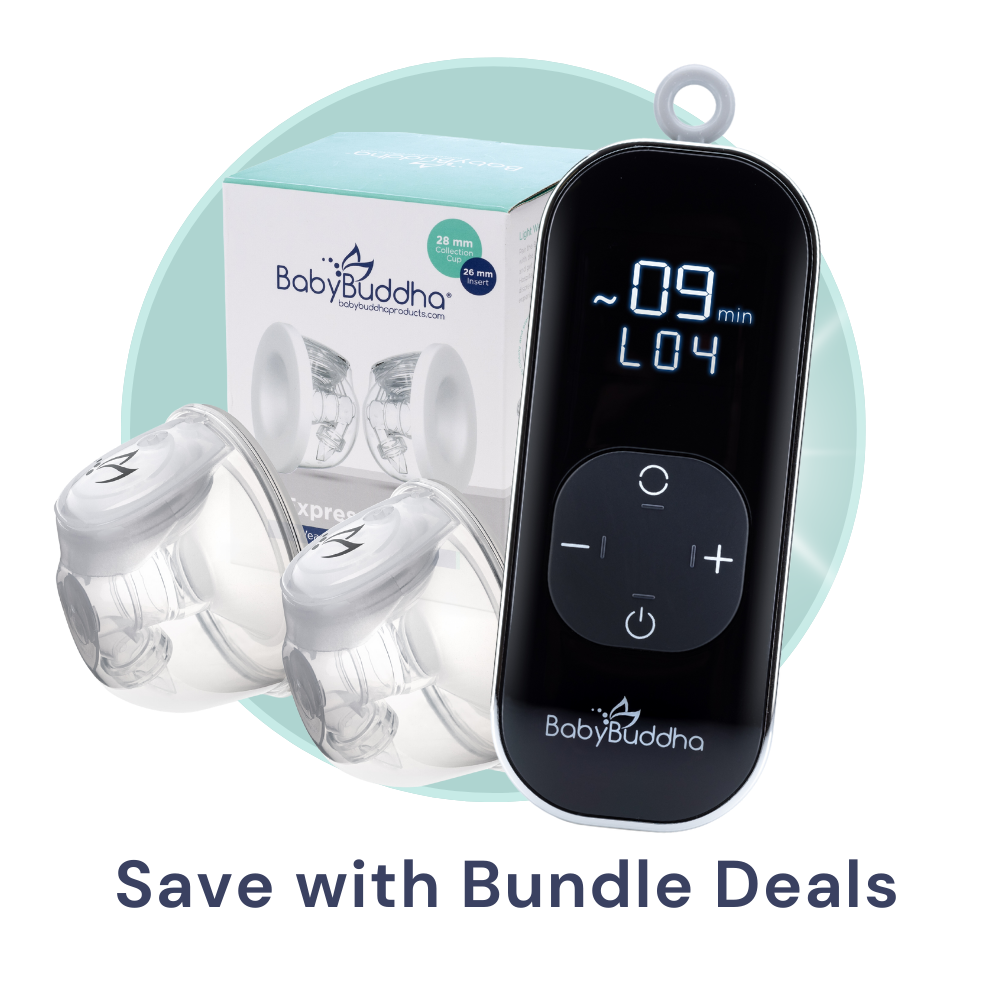
Want mobility without giving up full-drain power? Pair the BabyBuddha Wearable Breast Pump with the BabyBuddha 3.0 Primary Portable Breast Pump and use each where it's strongest.