

Quick Answer
Breast size doesn't determine flange size or the amount of suction you need. Flange fit is based on nipple diameter. If you have larger breasts, support, cup placement and pump format may affect how comfortable the setup feels.
A primary portable pump keeps the motor outside your bra. This can make flange placement easier to see and adjust. A fully in-bra wearable offers more discretion, though your bra needs enough room and support to hold each cup securely.
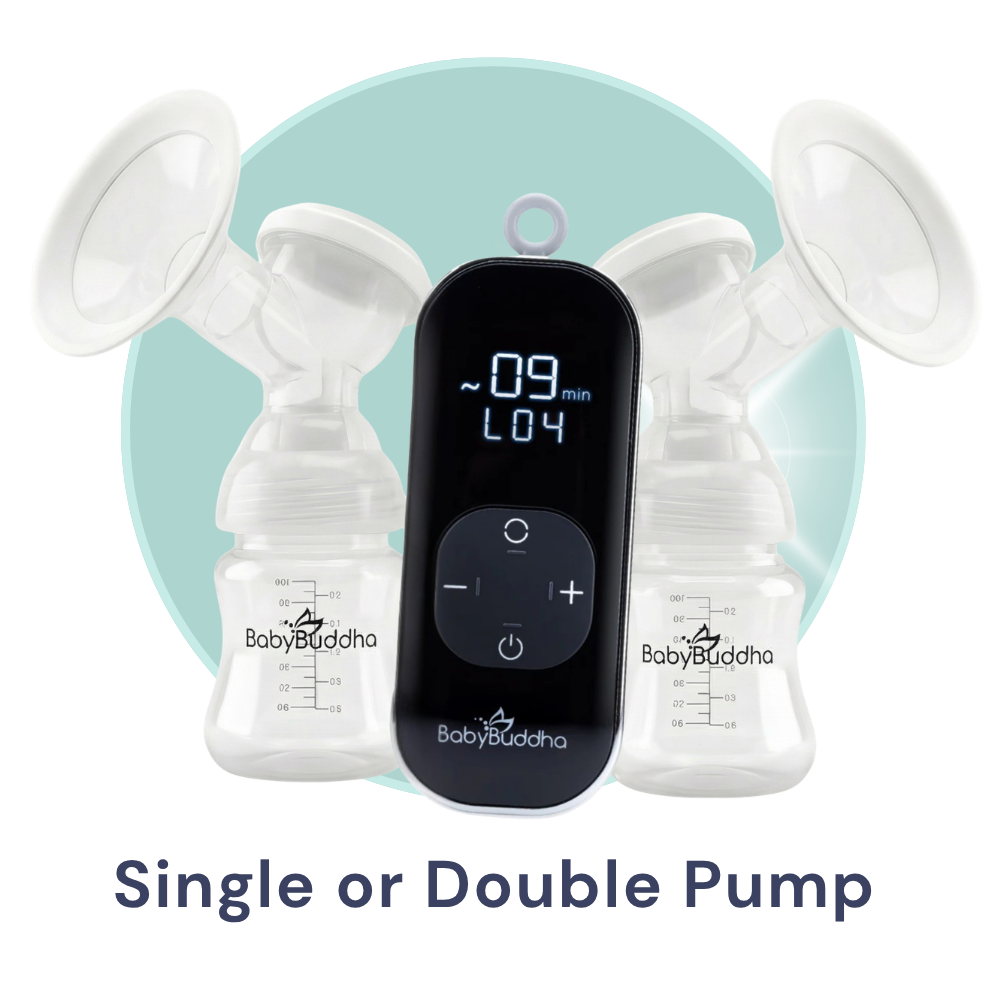
The BabyBuddha 3.0 Primary Portable Breast Pump includes two 24 mm flanges and ten EasyFit inserts. You receive two inserts in each size: 13, 15, 17, 19 and 21 mm. Its four modes and 30 settings let you adjust the pattern and suction for comfort.
Start with Nipple-Based SizingMeasure the nipple at its base without including the areola. The BabyBuddha Flange Fitting Guide explains how to measure and check your fit while pumping. |
Breast Pump Features to Consider
| Feature | Why it matters | What to check |
|---|---|---|
| Nipple-based flange sizing | A suitable tunnel size helps the nipple move freely. | A measuring guide plus nearby insert or flange sizes |
| Adjustable settings | Comfort and response can change between sessions. | Multiple modes and small setting changes |
| External or in-bra motor | The format affects weight, visibility and bra space. | A setup that stays aligned as you move |
| Supportive bra fit | Support can help a flange or wearable cup stay flush. | Secure hold without painful pressure |
Primary Portable and Fully In-Bra Pumps
The right format depends on when and how you pump. Breast size alone doesn't decide which type will work.
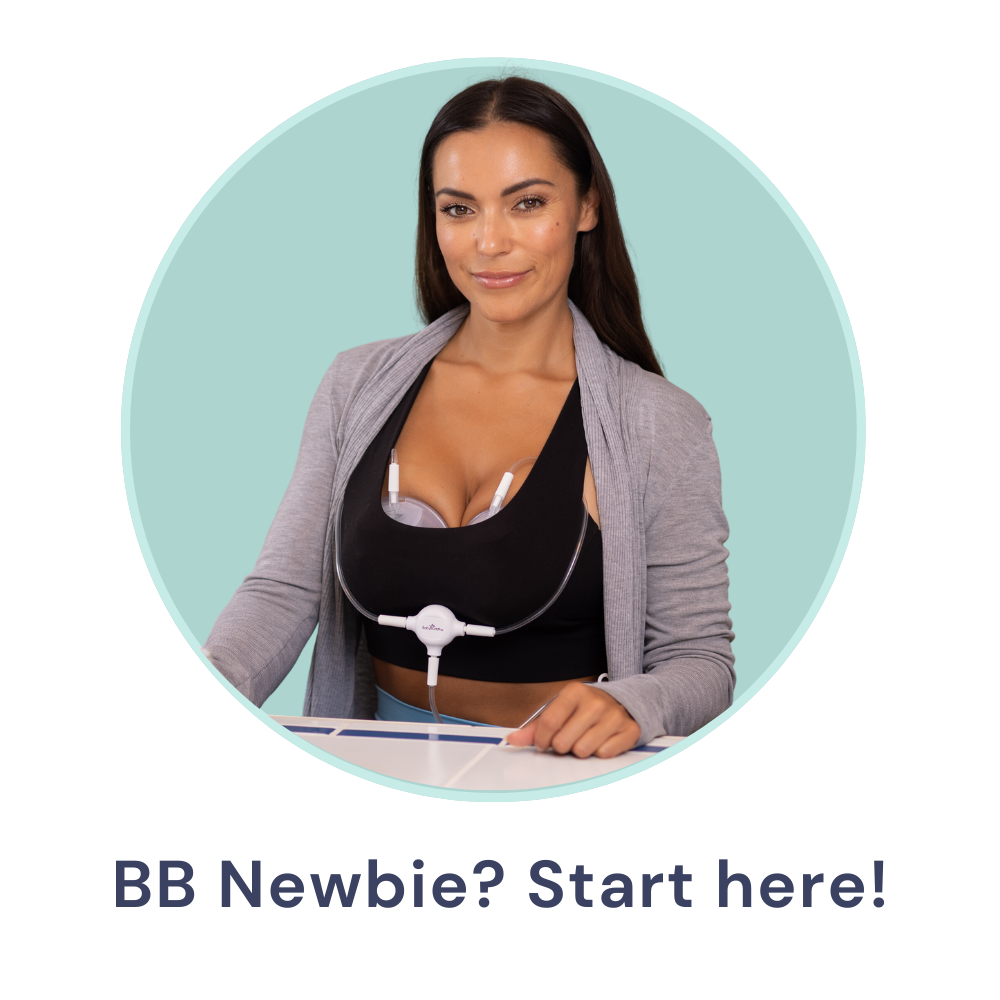
A primary portable pump such as the BabyBuddha 3.0 uses an external motor connected to flanges and bottles. The motor stays outside your bra. You can also see the nipple tunnel and flange position during a session.
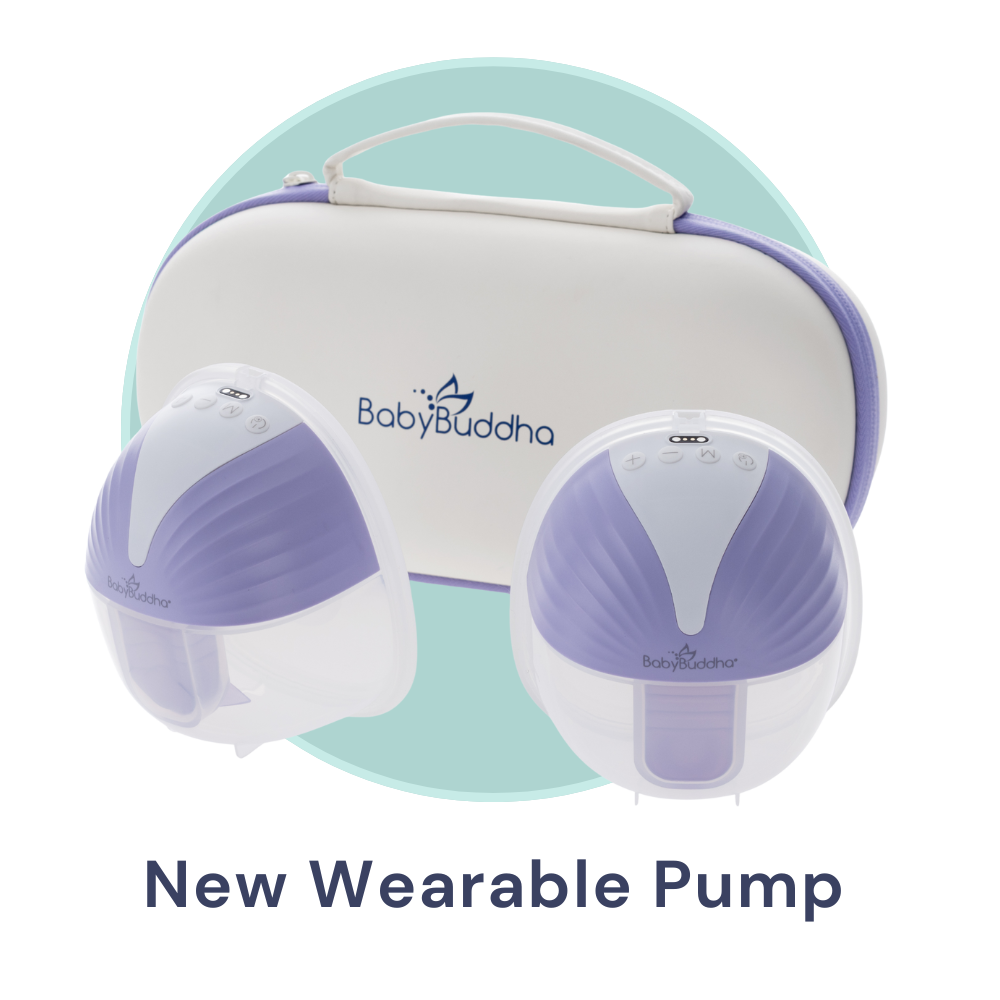
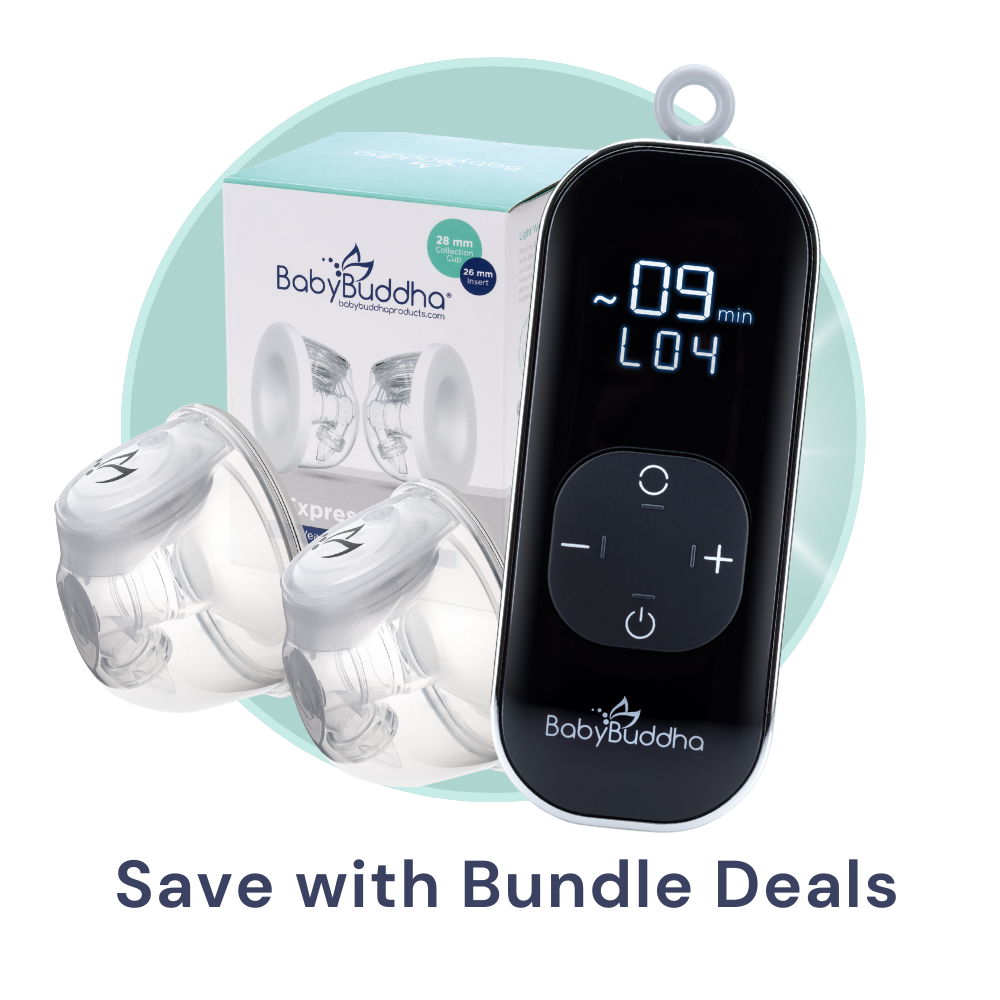
The BabyBuddha Wearable Breast Pump is a separate, fully in-bra secondary pump. Each cup needs to sit inside the bra without tilting, gapping or pressing painfully into the breast.
Try your chosen setup before relying on it away from home. Check the seal while sitting, standing and moving normally.
Key Points
- Measure your nipple, rather than using bra cup size, when choosing a flange or insert.
- Large breasts don't automatically require a larger flange or stronger suction.
- Use the highest suction that remains comfortable. Pumping shouldn't hurt.
- A pumping bra should hold flanges or cups securely without compressing breast tissue.
- Gentle breast massage and compression may help milk flow during pumping.
- A lactation consultant can assess persistent pain, fit concerns or unexpected output changes.

Breast Size and Flange Size Measure Different Things
A flange tunnel surrounds the nipple. It doesn't need to match the size of the breast. Someone with large breasts may need a small insert. Someone with smaller breasts may need a larger flange.
During pumping, the nipple should stay centered and move freely in the tunnel. Little or no areola should be pulled inside. A poor fit may cause rubbing, swelling, pain or a weak seal.
Breast size also doesn't predict milk supply. The U.S. Office on Women's Health notes that people with breasts of all sizes can make plenty of milk. Milk removal, pumping frequency and individual health factors are more useful considerations.
How to Measure for a BabyBuddha Flange or Insert
Measure before pumping
Gently stimulate the nipple so it stands up, but don't pump first. Measure across the nipple at its base in millimeters. Don't include the areola.
Begin with the closest size
Start with the flange or insert size closest to your measurement. BabyBuddha also recommends trying one size above and below when needed. Your two nipples may measure differently, so check both sides.
Check the fit during a session
A comfortable fit keeps the nipple centered and moving freely. Too small may cause rubbing, pain or reduced milk flow. Too large may pull in too much areola, cause discomfort or weaken the seal.
Recheck your size if pumping becomes uncomfortable. Nipple size can change over time. The BabyBuddha Flange Fitting Guide provides a visual measuring tool and fit examples.
The EasyFit Sizes Included with BabyBuddha 3.0
The BabyBuddha 3.0 includes two 24 mm flanges. It also includes ten EasyFit inserts, with two each in 13, 15, 17, 19 and 21 mm.
This range lets you test nearby sizes without buying several separate insert pairs. If you need a different replacement setup, review the flanges and inserts collection or ask the support team which part fits your pump.
Suction Settings Aren't Based on Breast Size
Large breasts don't require high suction. Start low and increase gradually while the setting remains comfortable. More suction isn't automatically more effective.
The BabyBuddha 3.0 offers a suction range of 53 to 315 mmHg. It has four modes and 30 settings. This gives you room to adjust the pattern and intensity as your response changes.
Watch how your body responds instead of aiming for the maximum setting. Lower the suction if you feel pain or see the nipple rubbing. Stop the session and check the fit if discomfort continues.
Finding a Supportive Pumping Bra
Breast size matters most when you consider bra support and cup space. Flanges need steady contact with the breast. Wearable cups need enough room to sit upright and remain sealed.
Look for a bra with an adjustable band, adequate cup coverage and openings that hold each flange securely. The fit should feel supportive without digging in or compressing the breast.
For an in-bra pump, place the cup in the bra before starting suction. Confirm that the nipple is centered. Check that the cup doesn't shift when you move. Bra sizing varies by brand, so use the manufacturer's size guide instead of automatically sizing up.

Comfortable Positioning During Pumping
Sit in a position that supports your back and lets the flange rest evenly against the breast. You may find a slight forward lean comfortable, though there's no required angle. Avoid a position that strains your neck, shoulders or back.
Keep tubing free from kinks with an external-motor pump. Check that bottles hang securely and don't pull the flange downward as they fill.
Gentle massage or compression may support milk flow. Stanford Medicine's hands-on pumping guidance recommends slow massage before pumping and comfortable suction. Avoid pressing hard enough to cause pain.
Check Your Fit Before Changing SuctionIf pumping hurts or the seal keeps breaking, review nipple alignment and flange size first. Use the Flange Fitting Guide or connect with a lactation consultant. |
How BabyBuddha 3.0 Fits This Use Case
The BabyBuddha 3.0 Primary Portable Breast Pump keeps its motor outside the bra. That may help if you want less equipment supported inside your bra and a clear view of flange alignment.
Its four modes and 30 settings let you make small changes during a session. The suction range runs from 53 to 315 mmHg. Use the level that feels comfortable and supports milk flow.
The included EasyFit system covers several common nipple measurements. Each kit contains two 24 mm flanges and ten inserts, with two each in 13, 15, 17, 19 and 21 mm. Other included items include a nipple ruler, lanyard, USB-C cable and tote.
If you prefer a fully in-bra secondary pump, consider the BabyBuddha Wearable Breast Pump. It is a separate pump with its own cups and sizing parts.
A Pumping Fit Checklist
|
Common Fit Concerns
A flange feels too large
Too much areola may enter the tunnel, or the seal may feel unstable. Measure again and try the closest smaller option if it matches your nipple measurement.
A flange feels too small
The nipple may rub the tunnel or move poorly. Try the closest larger option and check again at a comfortable suction level.
A flange or cup keeps slipping
Check nipple alignment, bra support and the seal. Bottle weight can also pull an external flange downward. Adjust one factor at a time so you can tell what helps.
A wearable cup feels crowded
Use a bra with enough cup depth for the pump. It should hold the cup flush without pushing it into the breast. If you can't maintain comfortable alignment, an external-motor setup may be easier to position.
Output is lower than expected
Breast size alone isn't the cause. Check fit, pump assembly, worn parts, session frequency and your usual response. Contact a lactation consultant or healthcare professional if output changes suddenly or remains concerning.
Personalized Pumping SupportA lactation consultant can assess flange fit, positioning and pumping concerns for your body. Connect with a BabyBuddha Lactation Consultant. |
Build a Pumping Setup That Fits Your Body
Your bra cup size doesn't determine your flange size or suction setting. Begin with nipple-based sizing. Then choose a pump format and bra that keep the setup supported and aligned.
The BabyBuddha 3.0 combines an external motor with four modes, 30 settings and an included range of EasyFit inserts. Review the flange fitting guide before your first session. You can also view the BabyBuddha 3.0 Primary Portable Breast Pump for the complete kit details.