

If pumping pinches, rubs, or leaves you with less milk than you expected, the culprit is often not your pump. It is your flange fit.
A flange is the funnel-shaped part that cups your breast and draws the nipple into the tunnel. An insert is a smaller silicone ring that drops inside a larger flange to shrink that tunnel for a closer fit.
This guide explains the difference, shows you how to measure, and tells you exactly when you need a smaller flange versus when an insert solves the problem, so pumping feels better and works better.
Also Read
- How to Choose the Right Flange Size for Your Breast Pump
- Shop Flanges and Inserts
- BabyBuddha 101 Blog Hub
In Short
A flange and an insert do the same job, dialing in the right tunnel size for your nipple, in two different ways. A flange is the full funnel that sits against your breast; an insert is a silicone reducer that fits inside a larger flange to make the opening smaller. If you are between standard sizes or your nipple swells during pumping, an insert is often the quickest comfort fix. If you need a size no insert can reach, you need a different flange. Measure your nipple diameter in millimeters, add a couple of millimeters for swelling, and size both breasts, since they can differ. BabyBuddha's EasyFit system covers 13mm to 24mm with flanges and inserts, so most moms can fine-tune without buying a whole new kit.
Key Points
- Same goal, different tool: Flanges and inserts both control tunnel size; inserts just do it inside an existing flange.
- Inserts are the cheaper fine-tune: They let one flange cover several smaller sizes without buying multiple flanges.
- Measure, do not guess: Use a ruler in millimeters across the base of the nipple, not the areola.
- Add a little for swelling: Most moms add roughly 1 to 4 mm to their raw measurement for pumping.
- Size both sides: It is common to need two different sizes.
- Comfort is a fit signal: Pain, a white nipple, or lots of areola pulled in usually means the flange is too big.
- Fit affects output: A snug, centered fit drains the breast better than a loose one.
- Re-check over time: Nipple size can change across your pumping journey, so re-measure if comfort or output shifts.
What Is a Flange?
The flange, sometimes called a breast shield, is the cone that sits against your breast. Your nipple is pulled into the narrow tunnel, where the pump's cycling suction expresses milk. The Cleveland Clinic explains that flange size and fit play an important role in comfort and pumping effectiveness.
Flanges come in a range of tunnel diameters. Standard pumps often ship with 24mm and 28mm, which run large for many people.
The tunnel diameter is the number that matters: it should fit your nipple with a little room to move, not your nipple plus a lot of areola. BabyBuddha flanges and inserts are designed to help you dial in a more precise fit.
What Is an Insert?
An insert is a silicone ring that drops inside a larger flange and reduces the tunnel opening, usually by several millimeters per insert.
It is the budget-friendly way to reach a smaller size without buying a separate flange for every step down.
Inserts shine when you are between sizes, when your nipple swells mid-session, or when you want one flange to cover a couple of sizes for different days.
BabyBuddha's EasyFit kit includes inserts in 13, 15, 17, 19, and 21mm. Since the flange size is 24mm, you can use it without an insert if 24mm is your correct fit, which means the system covers 13mm to 24mm.
You can explore the full EasyFit flanges and inserts lineup to find the setup that works best for you.
Flange vs Insert: When to Use Which
Use an insert when: You need to size down from a flange you already own, you are between two sizes, or your fit changes during a session as tissue swells.
Use a different flange when: The size you need is larger than your current flange, or smaller than your smallest insert can reach.
Use both when: Your two breasts need different sizes. You can pair a flange with an insert on one side and a different size on the other.
The practical rule: Start with the closest flange, then refine downward with inserts until pumping is comfortable and your nipple moves freely in the tunnel.

How to Measure Your Flange Size
Step 1: Measure Your Nipple
Use a ruler or measuring tape and measure the diameter at the base of the nipple in millimeters, not including the areola. Roll the nipple gently to stimulate first, but do not pump right before measuring.
Step 2: Measure Both Directions
Measure vertically and horizontally and use the larger number.
Step 3: Add for Swelling
Add roughly 1 to 4 mm to account for the nipple expanding during pumping. If you measure before birth, lean toward adding a few millimeters.
Step 4: Size Each Breast
Repeat on both sides, since asymmetry is normal. The Cleveland Clinic offers a helpful step-by-step flange measuring method, and the BabyBuddha flange fitting guide can help you match your measurement to the right size.
Signs Your Fit Is Wrong
Too big: Lots of areola is pulled into the tunnel, you feel rubbing, your nipple looks pale or pinched after pumping, or your output drops off.
Too small: The nipple rubs the sides of the tunnel, whitens at the base, or hurts during the pump cycle.
Just right: The nipple moves freely with a little space around it, you feel suction without pain, and the breast feels well drained.
Comfort and a centered, snug fit support better milk removal, while a poor fit can reduce output and cause soreness. The American Academy of Pediatrics and La Leche League International both emphasize the importance of comfort and effective milk transfer as part of successful breastfeeding and pumping support.

Keeping Flanges and Inserts Clean
Flanges and inserts touch milk every session, so clean them according to CDC guidance to help prevent bacteria and mold.
A closed-system pump keeps milk out of the tubing, so your cleaning load is mostly flanges, inserts, valves, and cups.
Replace silicone parts when they warp, cloud, or lose their snug fit, since worn parts can change suction and fit. You can refresh worn components with replacement breast pump parts.
Worn or warped parts? Refresh your fit with new flanges and inserts.
How BabyBuddha Handles Fit
EasyFit flanges: BabyBuddha's EasyFit system includes flange options plus 10 inserts, two each of 13, 15, 17, 19, and 21mm, with a flexible edge for comfort. Since the 24mm flange can be used without an insert, one kit covers a wide range from 13mm to 24mm.
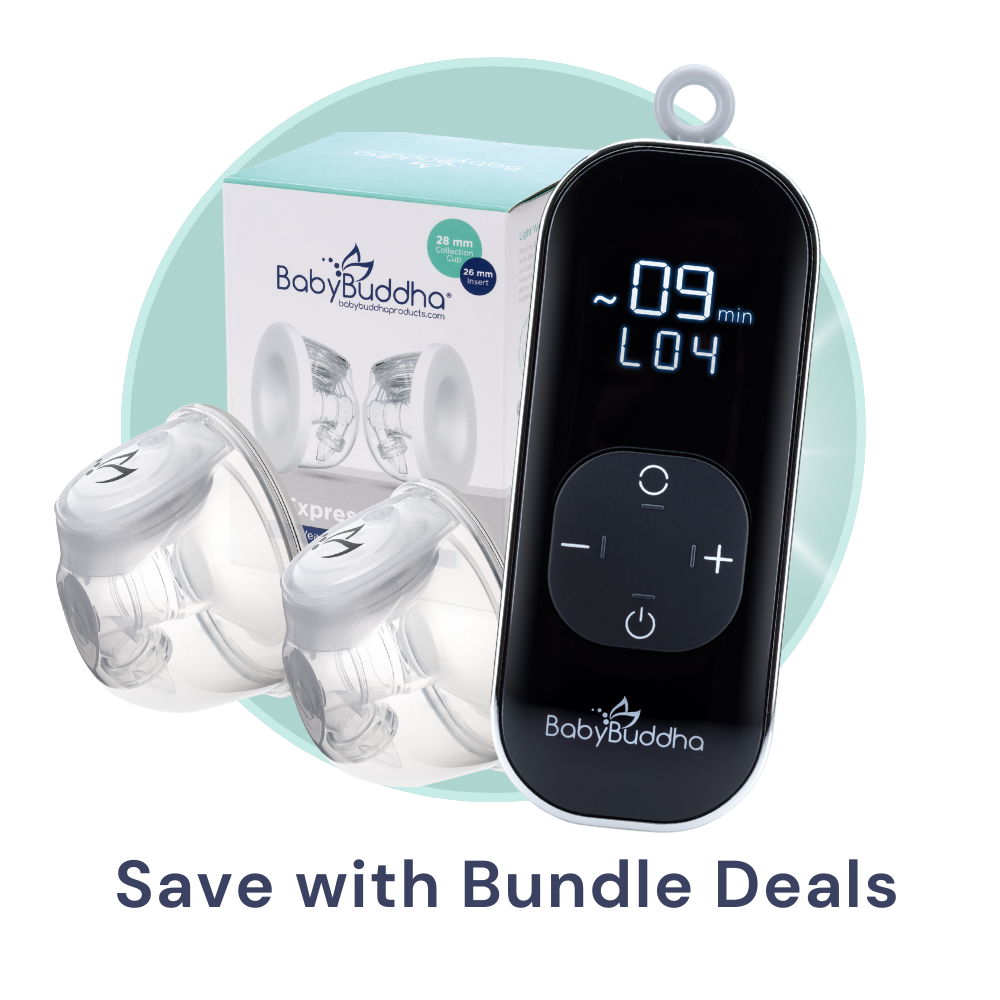
Express Cup inserts: Compatible with BabyBuddha 2.0 and BabyBuddha 3.0 only where confirmed by the product team. See the compatibility chart for model-specific guidance.
Why it helps: Most moms can refine fit with inserts instead of buying multiple full flanges, which saves money and cuts down on trial and error.
BabyBuddha 3.0 includes the EasyFit system with two 24mm flanges and inserts in 13mm, 15mm, 17mm, 19mm, and 21mm sizes, giving users more fit options from day one.
FAQ
Can I use an insert with any flange?
Inserts are designed for specific flange systems and need to match the brand and flange diameter. BabyBuddha's EasyFit set is designed as a matched system, so the inserts work with compatible BabyBuddha flanges.
What size flange do most people actually need?
The included 24mm flange that comes with many pumps is large for many moms. A lot of people size down once they measure, which is why inserts are so helpful for finding a closer fit without buying several separate flanges.
My breasts are different sizes. Is that normal?
Yes. Asymmetry is common, and it is normal to need different sizes on each side. You can use different inserts or flange sizes for each breast to get the most comfortable fit.
How often should I re-measure?
Re-check your size any time comfort or output changes. Nipple size can shift during pregnancy, postpartum, weaning, or across your pumping journey.
Will the right flange increase my supply?
A correct fit can improve comfort and milk removal, which may support output, but it is not a guaranteed supply booster. Fit is one important part of pumping well, along with frequency, hydration, nutrition, and overall breastfeeding support.
Conclusion
Flanges and inserts are not competing products; they are two tools for the same job. Measure first, start with the closest flange, and refine down with inserts until pumping is comfortable and your breast drains well.
Get the fit right and pumping gets easier. Explore BabyBuddha flanges and inserts, or use the flange fitting guide to find your size.