







Deciding to stop pumping is its own milestone, and it usually arrives quietly: your baby's eating more solids, you're heading back to a schedule that won't bend, or you've reached your finish line, and you're ready. However you got here, the question is the same. How do you stop without your body fighting you the whole way?
The answer is pace. Milk production runs on supply and demand, so when you remove milk less often, your body makes less. Do that gradually, and the hand-off is smooth. Do it overnight, and you risk engorgement, clogged ducts, and the kind of pain that sends people back to the pump for relief. This guide walks the taper step by step, from dropping your first session to packing the pump away for good.
Also Read
- Ten Tips for Moms That Are Exclusively Pumping
- How to Get Rid of a Clogged Milk Duct: Symptoms & Relief
- 9 Reasons for Sudden Decrease in Milk Supply, Plus Solutions
The Quick Answer
Stop pumping by tapering, not quitting cold. Drop one session every few days, and once you're down to fewer sessions, start trimming time and suction instead of pumping to empty. Expect the whole process to take anywhere from one to several weeks depending on how many sessions you're running and how much milk you make. Relieve pressure to comfort, not to drainage, so you don't signal your body to keep producing. Call your provider if you develop a hard, red, painful spot or a fever, since that can point to a clog that may lead to mastitis.
Key Points
- Taper, don't quit cold. Dropping all sessions at once causes engorgement and clogs.
- Drop one session every few days. Give your supply time to recalibrate before the next cut.
- Then shorten, don't just skip. Once you're down to a couple of sessions, trim minutes and suction rather than cutting sessions further.
- Relieve to comfort, not to empty. Hand express or pump just enough to take the edge off, so you don't signal production again.
- Watch for warning signs. A hot, hard, red lump or a fever is a reason to call your provider, not push through.
Should You Stop Pumping? Signs You're Ready
There's no universal finish line. Most moms reach one of three: your baby turns one and gets most of their calories from solids and whole milk, you're back on a schedule that pumping no longer fits, or you've reached the goal you set months ago. Any of those is reason enough, and a gradual wean works no matter when you start.
Before you taper, check what you're solving for. Wanting fewer sessions and wanting to stop are different problems with different fixes. If the trouble is that four sessions no longer fit your day, rebuilding your breast pumping schedule gets you there without giving up the supply you've built. If you're done, the rest of this guide is the path.
Timing around a change helps too. Weaning in the same week you start a new job, travel, or move means two adjustments at once, and fullness is harder to manage when your day is unpredictable. If you can, start the taper during a stretch you control.
Weaning Off the Pump Gradually: The Core Rule
Milk production answers to removal. The Academy of Breastfeeding Medicine states the relationship plainly: more frequent and thorough drainage of the breasts typically increases the rate of milk secretion. Run that backward, and you have the mechanism behind weaning off the pump. Remove less, and your body makes less. Remove less gradually, and your body makes less gradually.
The gentle way to dry up your milk supply is to hand your body a smaller job every few days, not to stop handing it work overnight. For most moms, that means one dropped session every two to three days, slower if you feel full or tender. Your breasts need a few days at each new level to register the change and scale production to match. Cut faster than that and milk sits clogged in ducts that drained fine yesterday.
How to Drop a Pumping Session, Step by Step
- Pick the easiest session first. Usually the one with the lowest output, or the one that fights hardest with your day. Keep your highest-output session, often the first of the morning, for last.
- Hold the new schedule. Stay at the reduced count for two or three days, until your body stops feeling overfull at the old time. That fullness signals that production hasn't caught up yet.
- Then cut the next one. Repeat the pattern, always dropping your easiest remaining session and working down toward your most productive.
- Expect a short adjustment each time. Mild fullness for a day or two after a cut is normal. Pain, a hard lump, or redness is not, and those call for the relief steps below.
One note on sequencing. If two sessions sit close together, drop one of those before you touch a session that stands alone in a long stretch. Lengthening a gap that's already long tends to leave you uncomfortably full.
Shortening Sessions and Lowering Suction

Once you're down to one or two sessions a day, dropping another whole session is a long jump. Trimming is gentler, and it sends the same message in smaller pieces.
- Trim time, not just count. A twenty-minute session becomes seventeen, then fourteen, then ten. Your body reads shorter removal the same way it reads less frequent removal.
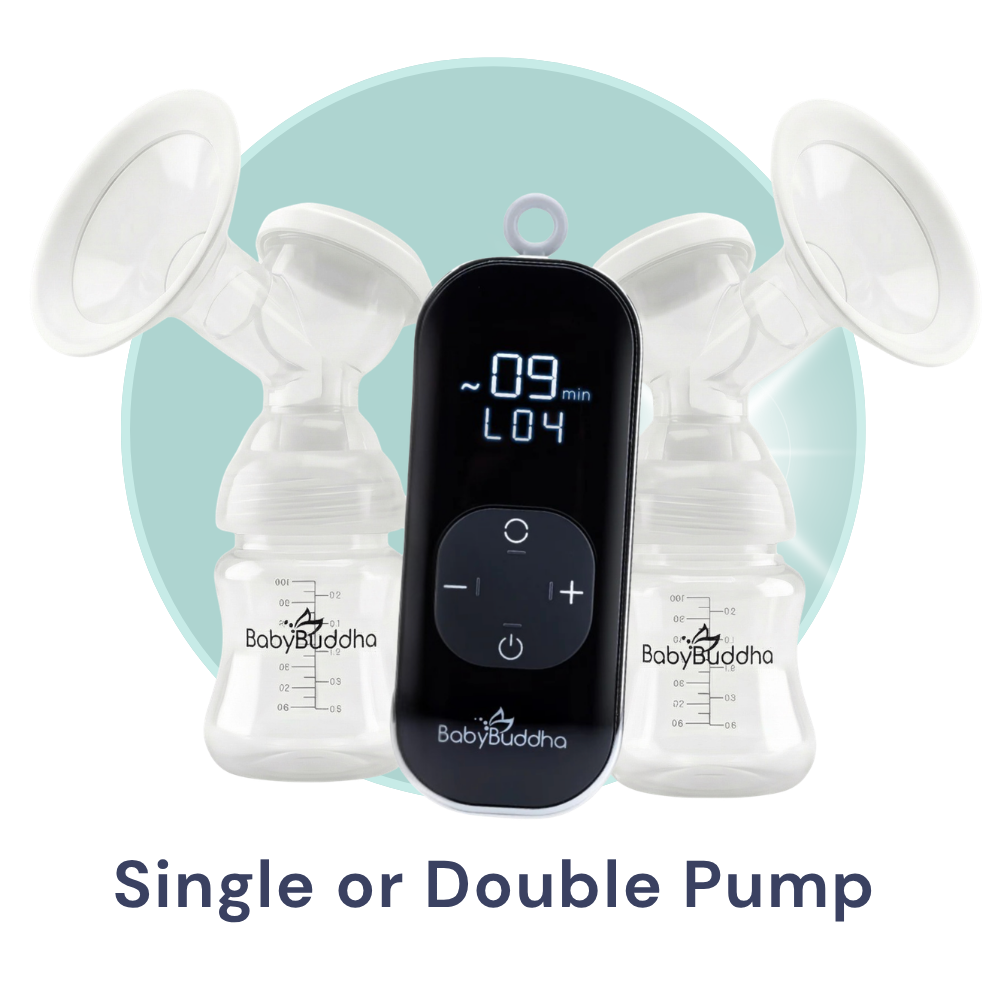
- Ease the settings. Step suction and speed down so each session takes a little less. A pump with fine control makes it easier to adjust in small steps. The BabyBuddha 3.0 Primary Portable Breast Pump runs hospital-strength suction up to 320 mmHg with four modes plus Double Drop Expression Mode, so you can walk the intensity down a notch at a time instead of dropping from full power to nothing.
- Stop short of empty. The goal changes at this stage. You're relieving pressure, not draining the breast, and milk left behind tells your body to make less next time.
Watch what happens between sessions, not what the timer says. When you can go an extra hour without feeling full, you're ready for the next trim.
Managing Engorgement and Preventing Clogs While You Wean
Fullness during a wean is normal, but draw the line at pain. The AAP names missed feedings, or a change in how often your baby nurses, as a cause of excessive engorgement. A taper creates the same scenario on purpose, which is why pace matters so much here.
- Relieve to comfort, never to empty. Hand express or pump a short burst, just enough to take the edge off. Full drainage signals your body to replace everything that left.
- Cool and support. Cold compresses between sessions reduce swelling, and a supportive bra that doesn't compress keeps pressure off ducts already working hard.
- Catch a plug early. A tender lump, a wedge of firmness, or a spot that stays sore after relief is a plugged duct in its early stage. How to Get Rid of a Clogged Milk Duct covers what to do before it escalates.
One piece of older advice to leave behind: pumping harder or more often to clear a plug. The Academy of Breastfeeding Medicine revised its guidance and now describes plugging as microscopic ductal inflammation and narrowing rather than a single obstructed duct, noting that the older milk-stasis advice lacks physiological validity. It also warns that pumping to empty perpetuates a cycle of hyperlactation. During a wean, that advice works directly against what you're trying to do.
How Long Weaning Takes, and Why Faster Isn't Better
Figure on one to several weeks. The range can be so wide because starting points vary. Someone pumping twice a day has two cuts to make. An exclusive pumper at six sessions has six, with a hold period after each one.
Read your body instead of the calendar. Fullness and tenderness mean slow down, and comfortable gaps mean you're clear for the next cut. Rushing trades a few saved days for a week of clogs, and a plugged duct puts you back on the pump for relief, which is the opposite of where you were headed.
Expect the last stretch to take longer than the first. Early cuts come off a full schedule, and your body absorbs them quickly. The final one or two sessions are the ones your supply defends hardest, and most moms hold at that step for a week rather than three days. Plan for it instead of reading it as a setback.
Exclusive Pumpers: A Slower, Steadier Taper
Exclusive pumping builds a fuller supply across more daily sessions, so the taper has more steps and each step moves more milk. Space your cuts three to four days apart rather than two to three, and watch more closely for the oversupply-related plugs that come with having more to move.
Watch output across the week rather than session by session. Exclusive pumping produces enough day-to-day variation that a single low session tells you nothing, and reacting to one adds back a session you'd only have to drop again later. A week of steady, comfortable gaps means you're ready for the next cut.
Protect the sessions doing the most work for the longest. For most exclusive pumpers, that's the first session of the morning and whichever session closes the longest gap. Those two come out last. Ten Tips for Moms That Are Exclusively Pumping covers the routine side if you decide you'd rather adjust than stop.
What to Do With the Pump and Your Milk Stash After

- Clean and store the gear properly. Wash every part that touched milk, let everything air dry completely before you reassemble it, and keep the motor and parts somewhere dry. How To Clean and Sterilize Your Breast Pump and Parts covers the full routine. Plans change, and a clean pump is always ready when you need it.
- Rotate the stash oldest first. Date-order what's in the freezer and work through the back of it first, so nothing ages out while fresher bags sit in front.
- Thaw safely. Move milk to the fridge overnight, or hold the bag under cool running water. Skip the microwave, which heats unevenly and damages some of what's in the milk.
A set of milk storage containers keeps the rotation readable, and a stash you can read at a glance is one you'll work through instead of losing track of. A Mom's Complete Guide on How To Safely Store Breast Milk has the timings for fridge, freezer, and thawed milk.
When to Call an IBCLC or Provider
Most weans need nothing but patience. A few situations need a person.
- Fever, redness, or flu-like aches. A hard, red, painful area with a fever can signal mastitis, and mastitis needs a provider rather than more time.
- A plug that won't clear. A lump that stays put for two or three days, even with gentle relief, deserves assessment.
- Pain that doesn't match the stage. Fullness is part of weaning. Pain isn't.
- Anything involving your baby's intake. Weight gain, feeding behavior, and how much your baby takes belong with your pediatrician or an IBCLC.
BabyBuddha isn't a medical service, and a pump is the wrong answer to a clinical problem. For any of the above, call an IBCLC or your pediatrician.
Conclusion
Stopping pumping goes smoothly when you let your supply wind down at its own pace. Drop one session every few days, hold the new schedule until the fullness passes, and once you're down to one or two sessions, trim minutes and suction instead of cutting another session whole.
Relieve pressure to comfort rather than to drainage, and the signals stay easy to read. Mild fullness means your body is adjusting. A hard, red, painful spot or a fever means call someone.
The pace is the whole thing. Nobody gets a better result for finishing in four days instead of three weeks, and the moms who wean without incident are the ones who let their bodies set the schedule.
Winding down and want control over every step? The BabyBuddha 3.0 Primary Portable Breast Pump gives you hospital-strength suction up to 320 mmHg and fine adjustment across its modes so that you can taper by degrees instead of in jumps.